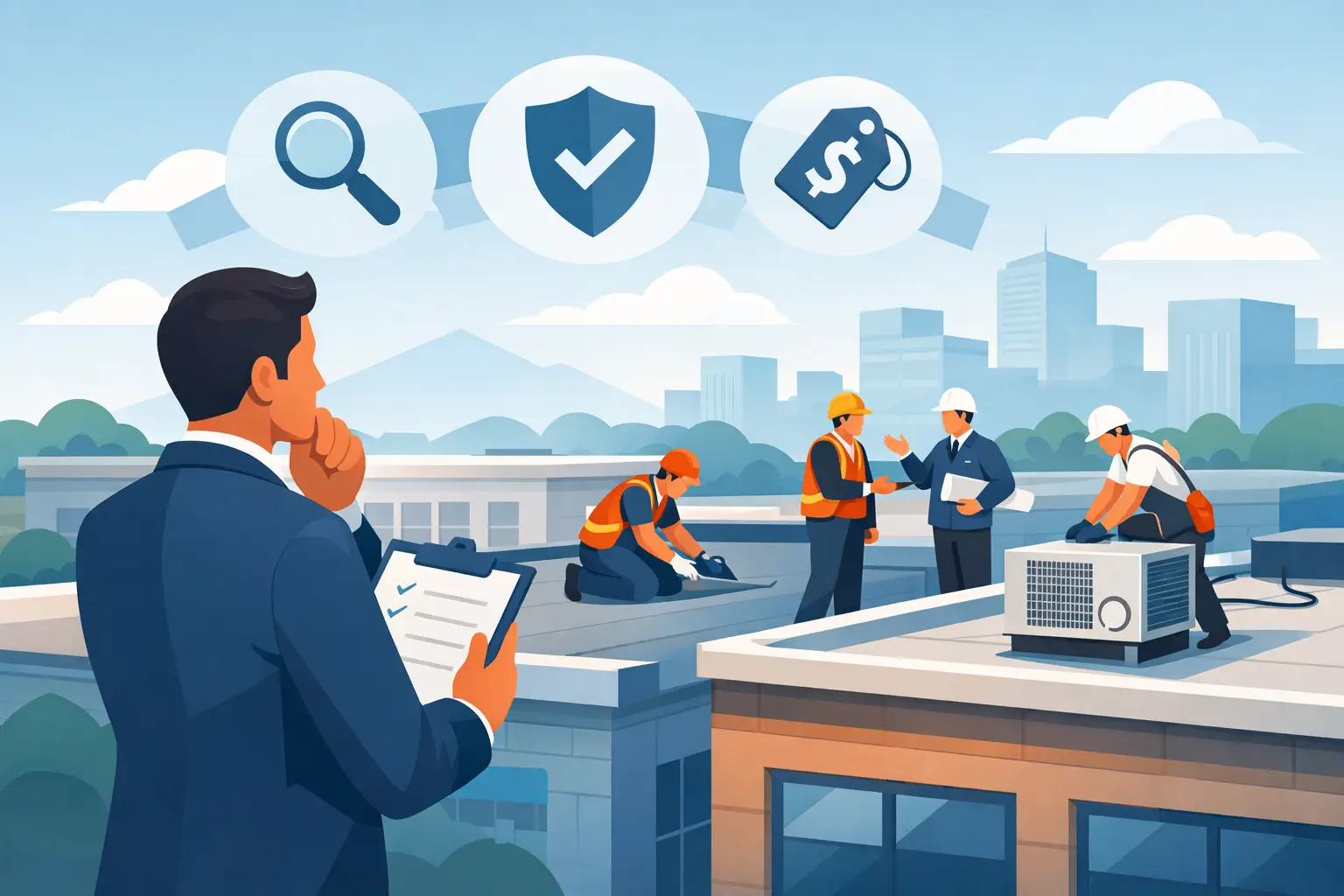
A roof failure on a small office, retail building, church, or multi-unit property does more than create stress – it can interrupt tenants, expose interiors, and turn a manageable project into a costly disruption. That is why choosing the right light commercial roofing contractor matters so much. You are not just hiring someone to install materials. You are trusting a company to protect your building, stay on schedule, and give you confidence that the job was done right.
For property owners across southern New Hampshire and nearby coastal markets, the biggest mistake is assuming all roofing companies handle light commercial work the same way. They do not. Some are set up for residential jobs only. Some chase any project they can get. Others have the crew size, training, insurance, and systems to handle commercial-scale roof replacement efficiently without turning your building into a long-term construction zone.
What a light commercial roofing contractor actually does
A light commercial roofing contractor typically works on smaller commercial properties rather than large industrial complexes or major flat-roof systems on massive warehouses. That can include offices, retail storefronts, condo associations, churches, mixed-use buildings, and other properties that need professional roof replacement with minimal downtime.
The work often overlaps with residential methods in some areas, especially when architectural asphalt shingles are involved, but the expectations are different. Commercial property owners need clearer scheduling, tighter jobsite control, stronger documentation, and a contractor who understands that delays affect business operations, tenants, and liability.
That is where experience matters. A company that knows how to replace a roof on an occupied home is not automatically the right fit for a small commercial property. The right contractor understands access challenges, staging, crew coordination, material delivery, cleanup standards, and how to keep the project moving fast.
Why speed matters in light commercial roofing
For many owners, speed is not about convenience. It is about reducing risk. The longer a roof replacement drags on, the more chances there are for weather exposure, business disruption, tenant complaints, and scheduling problems.
A high-efficiency contractor with a large, professionally trained crew can often complete projects much faster than smaller operations. That changes the entire experience. Instead of wondering how long your building will be under construction, you get a tighter timeline, a more organized site, and less disruption to normal use.
Of course, fast only works when it is paired with discipline. A rushed job by an understaffed or untrained crew creates its own problems. The goal is not speed for its own sake. The goal is efficient, professional execution. That is a major difference, and smart property owners should ask about crew size, training, project management, and realistic completion timelines before signing anything.
The biggest things to look for before you hire
Insurance and professionalism
A legitimate light commercial roofing contractor should be fully insured and prepared to explain coverage clearly. That protects you from the kind of contractor risk that many owners do not think about until it is too late. If a company cannot quickly verify insurance, that is not a small detail. It is a major warning sign.
Professionalism also shows up in the estimate process. Was the inspection thorough? Did they explain material options clearly? Did they answer questions directly, or did they rely on vague promises? A solid contractor knows that confidence is built before the first shingle is installed.
Experience with replacement, not just general roofing
Not every roofing company specializes in full roof replacement. Some are built around smaller jobs and do not have the systems to manage larger tear-offs and installations efficiently. When you are comparing companies, ask how often they handle full replacements on occupied light commercial properties.
That answer tells you a lot. A contractor that regularly manages this type of work will usually have a cleaner process, a better-trained crew, and fewer surprises once the project starts.
Material quality and warranty protection
A low bid can look attractive until you realize it is built around lower-grade materials or weak warranty coverage. That is not where most owners want to save money. Better roofing systems cost more upfront, but they often provide stronger long-term value, especially when the materials are backed by meaningful manufacturer warranties.
Architectural asphalt shingles remain a strong fit for many light commercial properties because they balance appearance, durability, and cost. In other cases, rubber roofing systems make more sense, depending on the roof design and drainage conditions. A trustworthy contractor will explain the trade-offs instead of pushing one option on every building.
Local track record
Local experience matters because climate matters. Roofing in coastal New Hampshire and nearby Massachusetts or Maine is not the same as roofing in a milder market. Ice, wind, snow load, and seasonal moisture all affect material performance and installation standards.
A contractor with real local history understands those conditions. They also understand local expectations. Property owners want a company that shows up, communicates clearly, protects the site, and stands behind the work after the job is complete.
Warning signs that should make you slow down
If an estimate feels rushed, incomplete, or confusing, trust that instinct. Roofing proposals should be clear about scope, materials, timelines, and what is included. Vague numbers and verbal assurances are not enough.
You should also be cautious with contractors who cannot explain how they handle cleanup, crew supervision, or scheduling. Light commercial roofing is not just about installation technique. It is also about project control.
Another red flag is a company that seems to have no real specialty. If they present themselves as doing everything for everyone, it usually means they are not built around a repeatable process. A dependable contractor knows what they do best and talks about it with confidence.
Why the estimate process tells you a lot
A free estimate is not just a price quote. It is your first look at how the contractor operates. Good companies use that meeting to educate you, inspect the roof carefully, explain your options, and help you avoid expensive mistakes.
That matters because most property owners are not roofing experts, and they should not have to be. Your contractor should make the process easier to understand, not harder. If the conversation leaves you more confused than when it started, keep looking.
The best estimate process is practical and direct. It gives you useful information, realistic timing, and a clear recommendation based on your building rather than a generic sales pitch.
Light commercial roofing contractor questions worth asking
Can your crew handle this job efficiently?
This is one of the most useful questions you can ask. A contractor may have the technical skill to install the roof, but if they do not have the manpower and systems to do it efficiently, your project can drag on unnecessarily.
Ask who will be on site, how the project will be managed, and what kind of timeline is realistic. Larger, professionally trained crews often give property owners a real advantage because they can complete work faster while maintaining control of the site.
What roofing system makes sense for my building?
A good contractor should talk through your options in plain English. For some properties, asphalt shingles are the right choice. For others, a rubber roofing system may be a better fit. The key is whether the recommendation matches the structure, slope, drainage, and long-term goals of the property.
What gives me confidence this company will stand behind the work?
This is where years in business, insurance coverage, warranty-backed materials, and local reputation all come into play. A company that has been serving the area for decades has more at stake than a short-term operator looking for quick jobs.
That local accountability matters. It is one thing to offer promises during the sales process. It is another to have a long-standing reputation built on actually delivering.
Choosing confidence over the cheapest number
The cheapest proposal is often the easiest one to regret. Light commercial roofing is one of those projects where execution matters just as much as price. If the crew is too small, the process is disorganized, or the materials are weak, the lower bid stops looking like a bargain very quickly.
Owners who care about speed, professionalism, and peace of mind usually do better with a contractor built for efficient replacement work. That is especially true in markets where weather can shift quickly and project delays carry real consequences.
For many local owners, that is why established companies like Seacoast Roofing of NH stand out. A contractor that has been serving the region since 1987, offers free estimates, uses professionally trained crews, and focuses on fast, well-managed installations gives customers something they actually want – less disruption and more confidence.
If you are comparing roofing companies for a small commercial property, do not just ask who can do the job. Ask who can do it efficiently, professionally, and with the least risk to your building. That is usually where the right decision becomes clear.
Leave a Reply